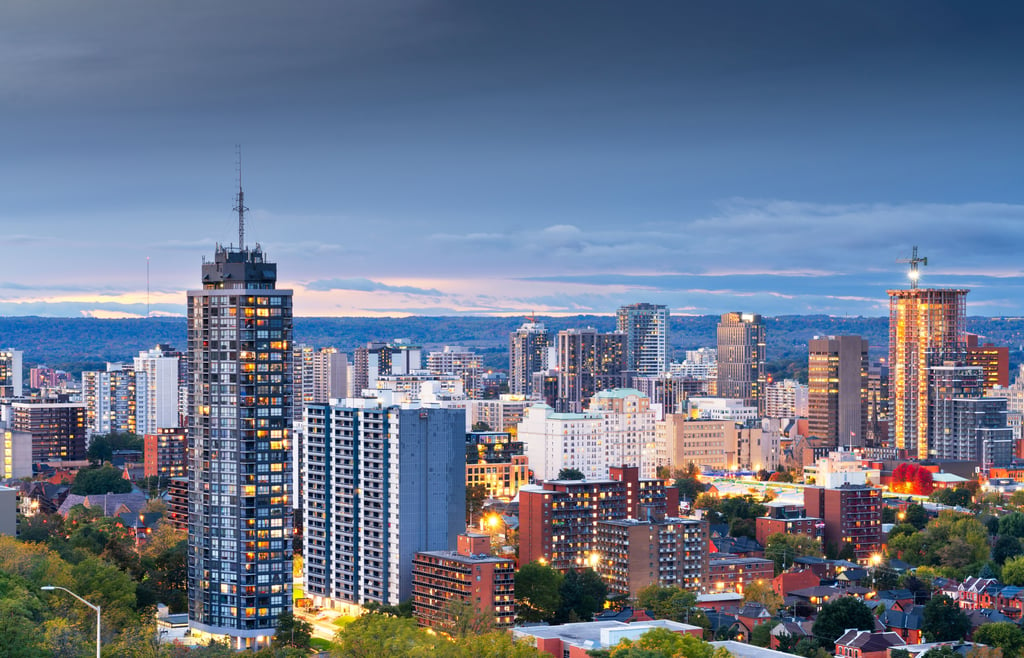
Investing in Hamilton: Opportunities Beyond Toronto
Discover the evolving landscape of investing in Hamilton. This city is emerging as a diversified economy with strengths in life sciences, advanced manufacturing, and more. Learn why Hamilton offers unique opportunities and advantages that go beyond being just a cheaper alternative to Toronto.
3 min read
I was at a conference recently on investing in Hamilton, and the most interesting part was not the usual “next big thing” boosterism. It was hearing where the serious money still sees issues, and where it clearly sees opportunity.
The headline is that Hamilton is no longer being pitched as a cheaper version of Toronto. At least not by the people actually putting capital to work there.
The better case for Hamilton is that it has become something much more interesting. It is one of the few cities in this region that still feels like a real city with its own economy. Not just housing, not just spillover, not just affordability. It has history, a port, industrial land, an arts scene, real neighbourhood texture, and enough cultural identity that people can picture a life there that is not simply “commute to Toronto and come home.”
Hamilton is no longer a one-note steel city. That was one of the clearest themes. Steel still matters, but the city now sees itself as a diversified economy with real strength in life sciences, advanced manufacturing, logistics, agri-food, and transportation infrastructure.
There was a repeated point that Hamilton is not just benefiting from “being cheaper than Toronto.” The panel kept coming back to deeper fundamentals:
Access to labour
Multiple universities within reach
Port, airport rail, GO, and highway infrastructure
Available industrial land
A municipality that, at least in theory, wants investment
That last part matters. Several panelists basically said Hamilton is winning because it still has room to do things that Toronto either cannot or no longer does easily.
The strongest pro-Hamilton argument was that it has real city energy, not just suburban growth. One speaker made the point that places like Mississauga and Vaughan may be larger in some ways, but Hamilton has something they do not. It has its own culture, history, arts scene, restaurant scene, and identity. That might sound fluffy, but for residential investment and city-building, it is not. It is one of the reasons capital is willing to bet on it.
The industrial and logistics story sounded very real. Hamilton’s port lands, airport lands, business parks, and legacy infrastructure were described as major strategic assets. A big theme was that Hamilton is well positioned as a manufacturing and logistics gateway, especially for firms that need access to the U.S. border and want to avoid some of the friction of the GTA.
A notable point was the container terminal / container handling push. The pitch is that Hamilton could become a more meaningful logistics node instead of relying so heavily on containers moving through Montreal and then inland to Vaughan-area rail yards. Even capturing a small share of that broader market would be meaningful.
Downtown Hamilton is still the big question mark. This was probably the most candid part of the panel. There was a lot of optimism about the city overall, but the downtown conversation was much more mixed:
-Office vacancy and weak office attendance are hurting foot traffic
safety and the perception of safety are actively affecting investment decisions.
- Residential developers still believe in the downtown, but they want stronger conditions on the ground.
- The TD Coliseum renovation and event traffic are seen as major catalysts.
- The city is trying to respond with a 10-year downtown revitalization strategy and more policing presence
The most honest takeaway: Hamilton has momentum, but the downtown still needs help.
There was also a very practical discussion around incentives and development charges. Developers were essentially saying: Hamilton has done smart things before, including tax incentive programs and brownfield remediation support, but this is not the moment to pull those back. Their argument was simple. If you want investment in a difficult market, you cannot make projects harder to finance.
The Hamilton LRT came up as one of those things Hamilton obviously needs, but still cannot fully cash in on because it is not here yet. The panel’s message was basically that everyone believes in it, everyone sees how much development it could unlock, but until it is actually operating, developers still need to solve for today’s market, and today’s market still wants parking.
The sectors they seemed most bullish on by 2030:
Life Sciences
Advanced Manufacturing
Logistics and Trade Infrastructure
Agri-food
Possibly nuclear-related manufacturing tied to large component movement via port access
The biggest risk to Hamilton’s momentum, according to the panel, was not affordability, interest rates, or even competition from elsewhere. It was safety and perception of safety downtown.